
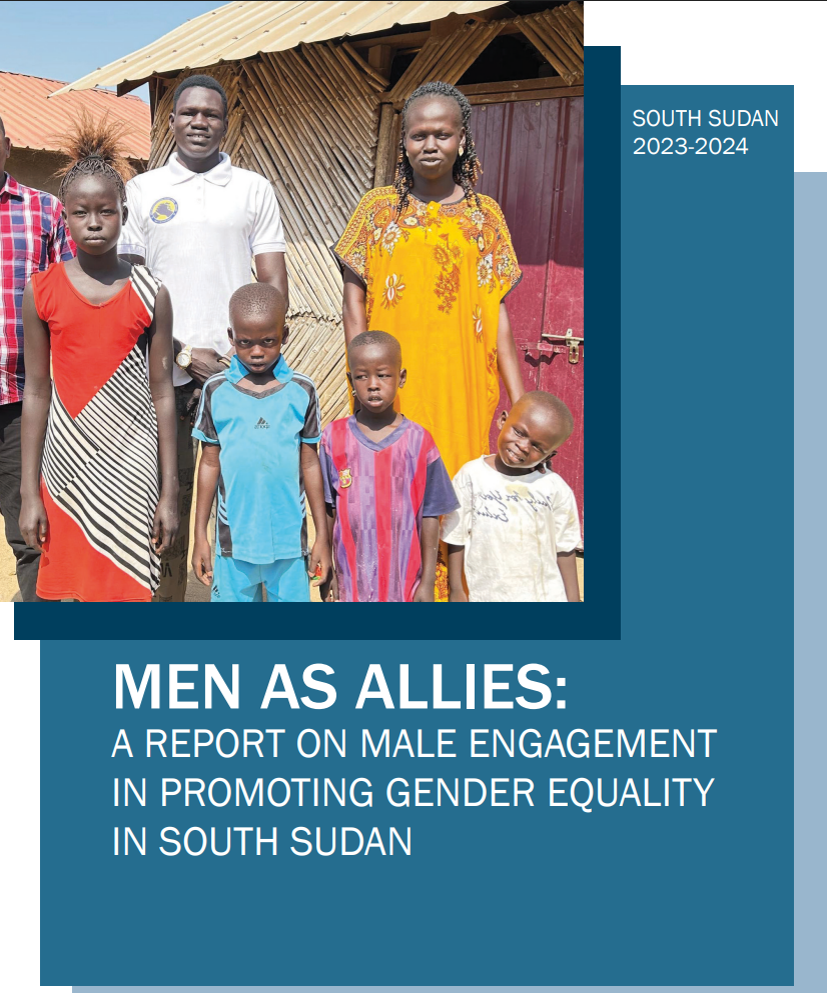
The National Transformational Leadership Institute (NTLI) supports a range of initiatives for women in South Sudan, including protection from gender-based violence, access to healthcare and education, and promotion of leadership roles and peace-building participation. Acknowledging that social transformation for gender equality requires the involvement of men and boys, NTLI conducted The South Sudan Male Engagement in Promoting the Gender Equality Agenda (The Male Engagement Study). This investigation explores effective strategies for meaningful engagement with men and boys to promote women’s empowerment and transform the social and gender norms that reinforce patriarchy and inequality. The study utilized data from existing literature, focus group discussions (FGDs), and key informant interviews (KIIs).
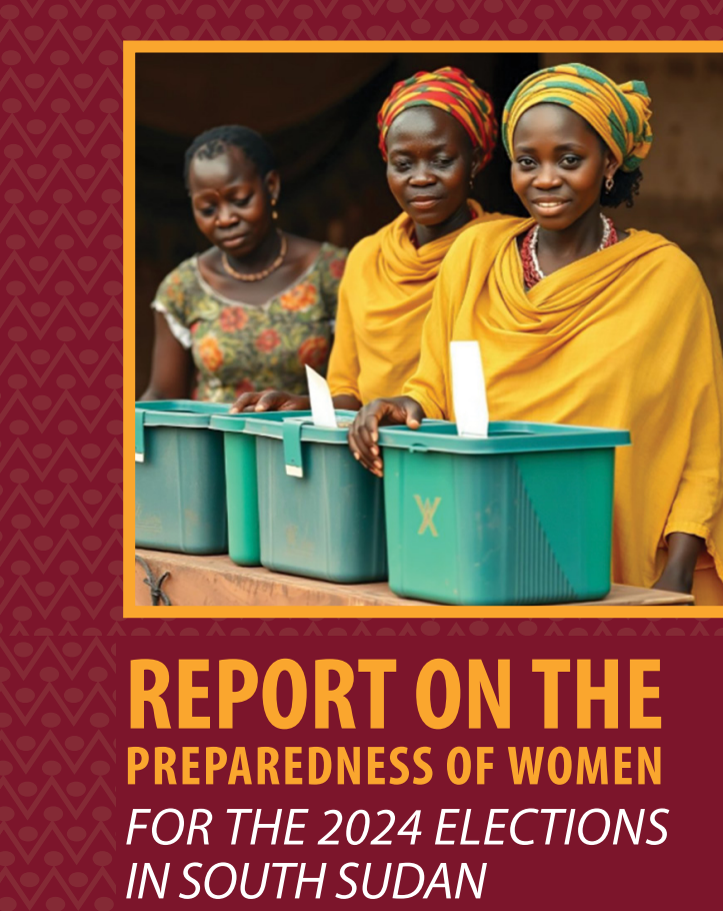
National Transformational Leadership Institute (NTLI) in collaboration with the Ministry of Gender, Child & Social Welfare (MGCSW) and ICAN, assessed women’s readiness to participate as voters and candidates in South Sudan’s national elections, which have been postponed due to unfulfilled prerequisites of the Revitalised Agreement on the Resolution of Conflict in South Sudan (R-ARCSS). Based on a mixed-methods study of 726 respondents across the country, the findings indicate that women are not fully prepared to participate in the election process, primarily due to challenging local socio-cultural conditions—like traditional gender roles and a hostile political environment—and incomplete national political prerequisites, such as the finalisation of key legal frameworks. Despite these significant barriers, the survey also revealed a strong interest in politics among women, driven by a desire to improve lives and contribute to national development, leading the report to provide a comprehensive set of recommendations to improve women’s preparedness and increase their meaningful participation ahead of the planned 2026 elections.
National Transformational Leadership Institute (NTLI) and the Ministry of Gender, Child and Social Welfare (MGCSW) in partnership with UNDP to establish the current status of women’s representation and participation in the public sector and accelerate gender equality progress in support of peacebuilding efforts. Despite a constitutional commitment to a minimum 35 percent gender quota and a broad legal and policy framework aligned with international benchmarks, deep-seated historic, cultural, and socio-economic obstacles persist. The findings reveal a systematic under-representation of women in almost all public administration decision-making positions, indicating that significant gaps remain between policy and practice due to lacking implementation and enforcement mechanisms, which ultimately undercuts successful inclusion. The report concludes by providing strategic recommendations and emphasizing the critical need for financial and capacity support to advance the careers of aspiring, newly recruited, and existing women leaders.
National Transformational and Leadership Institute at the University of Juba, assesses the status of women’s representation and participation in public administration at the State and Administrative Area levels to accelerate progress towards gender equality. The research finds that while the Government of the Republic of South Sudan (GRSS) has a comprehensive legal and policy framework, including a 35 percent gender quota in decision-making roles, implementation lags significantly, with systematic under-representation of women in nearly all high-level executive, civil service, and judiciary positions, though they make up 32.3 percent of the overall public workforce. Key challenges undermining GEPA efforts include deep-seated cultural and socio-economic obstacles, limited financial resources allocated to the Ministry of Gender, Child and Social Welfare, the absence of an independent accountability mechanism to enforce quotas, and poor implementation of human resource policies concerning recruitment, promotion, and workplace harassment. The report concludes that gaps persist between policy and practice, and it provides strategic recommendations focused on strengthening institutional frameworks, enforcing quotas, and allocating more resources to gender mainstreaming initiatives.